Essential Heater Maintenance Checklist for Homeowners

Heater Maintenance Checklist for Homeowners: Essential Furnace Maintenance Tips and Preventative Care
Regular heater maintenance keeps your home safe, comfortable, and energy-efficient by preventing common failures and detecting safety hazards early. This heater maintenance checklist for homeowners explains what routine care entails, which tasks you can safely do yourself, and which issues require professional attention to protect your household from carbon monoxide and costly breakdowns. Many homeowners face unexpected heating outages, rising energy bills, and indoor air quality problems when routine maintenance is neglected; this guide provides clear, actionable steps that reduce those risks and improve system longevity. You will learn why regular maintenance matters, which DIY tasks are appropriate, when to call a technician for a tune-up, seasonal efficiency tips, common problems and troubleshooting guidance, and the measurable benefits of annual service. Throughout, targeted keywords like heater maintenance checklist, furnace tune-up checklist, and heat exchanger inspection are integrated with practical tables and lists to make follow-through simple and safe for homeowners.
Why Is Regular Heater Maintenance Important for Homeowners?
Regular heater maintenance is the proactive practice of inspecting, cleaning, and testing furnace components to ensure safe, efficient operation and prevent failures. By addressing airflow, combustion, and controls, maintenance reduces energy waste, lowers the risk of carbon monoxide exposure, and extends equipment lifespan. Recent research and industry guidance through at least 2025 emphasize that tuned systems run more efficiently and produce fewer emergency repairs, making seasonal inspections a cost-effective habit. The next paragraphs explain how maintenance improves energy efficiency and safety, and then outline the dangers of skipping annual inspections so homeowners understand both benefits and risks.
Homeowners benefit directly when their systems are optimized; clean filters and calibrated thermostats reduce runtime and improve comfort, while sealed ducts and correct burner adjustment lower fuel use. Those mechanisms are central to why maintenance pays for itself through reduced energy bills and fewer emergency repairs.
How Does Heater Maintenance Improve Energy Efficiency and Safety?
Heater maintenance improves energy efficiency by restoring designed airflow and combustion balance, and it improves safety by verifying combustion integrity and ventilation paths. Cleaning or replacing the air filter increases airflow, which reduces blower runtime and prevents the heat exchanger from overheating; sealing duct leaks reduces distribution losses, and precise thermostat calibration prevents excessive cycling. Proper combustion tuning and combustion analysis lower carbon monoxide production and ensure burners operate in the correct fuel-to-air ratio, directly reducing safety risks. Understanding these mechanisms shows why routine checks—airflow, ducts, burners, and controls—are essential parts of an effective maintenance strategy.
Routine efficiency improvements often translate into measurable savings and improved indoor comfort, which leads naturally to the risks homeowners face when inspections are neglected.
What Are the Risks of Neglecting Annual Furnace Inspection?
Neglecting annual furnace inspection raises multiple safety, reliability, and cost issues that compound over time rather than resolving themselves. Without inspection, heat exchangers can develop cracks that leak combustion gases into living spaces, filters and coils clog, causing inefficient operation and higher energy bills, and electrical or ignition components can fail unexpectedly during cold weather. Warranties and manufacturer recommendations frequently require regular documented maintenance, so skipping service can void coverage and increase out-of-pocket repair costs. Homeowners who delay inspections face a higher chance of emergency service calls, elevated utility bills, and potential exposure to carbon monoxide—clear reasons to adopt a predictable maintenance schedule.
Recognizing these risks makes it easier to decide which tasks are safe for homeowners to perform and which require a trained technician.
What DIY Heater Maintenance Tasks Can Homeowners Safely Perform?
Homeowners can safely perform several routine maintenance tasks that improve heater performance and reveal developing issues without exposing themselves to combustion or electrical hazards. Typical safe tasks include replacing air filters, checking and programming thermostats, clearing vents and combustion-air openings, and performing visual inspections for soot, leaks, or unusual odors. These activities require minimal tools and avoid internal combustion components; they help preserve efficiency and give early warning of problems that need professional diagnosis. The following subsections provide step-by-step guidance for filter replacement and thermostat checks, plus a practical EAV table that compares tasks, required tools and skill level, and recommended frequency and safety notes.
• Replace air filters regularly to maintain airflow and indoor air quality.
• Program thermostats for setback schedules to reduce run time and energy use.
• Keep returns, vents, and combustion air paths clear of storage and debris.
These simple actions reduce load on the heater and make professional inspections more productive by showing technicians an already well-maintained baseline.
Before the table, note that filter and thermostat work are safe when the power is off and homeowners follow manufacturer sizing and orientation guidance. The table below helps match tasks to tools and schedules.
• Air filter replacement — Tools / Skill Level: None to basic (gloves) — Frequency & Safety Notes: Replace every 1–3 months depending on MERV rating and household conditions; always power off before handling in-line filters
• Thermostat checks & battery swap — Tools / Skill Level: Small screwdriver, fresh batteries — Frequency & Safety Notes: Check seasonally; program schedules to reduce energy use and replace batteries annually
• Vent and register clearing — Tools / Skill Level: Vacuum, brush — Frequency & Safety Notes: Inspect monthly; do not block returns or combustion air vents; avoid covering heat registers
How to Replace and Choose the Right Furnace Air Filter?
Choosing and replacing the right furnace air filter preserves airflow, improves indoor air quality, and reduces strain on the blower motor through regular inexpensive maintenance. Identify filter size printed on the existing filter frame, note airflow direction arrows, and select an appropriate MERV rating—MERV 6–8 is suitable for many homes, while higher MERV values improve filtration but can restrict airflow on some systems. To replace, power down the system, slide out the old filter, orient the new filter correctly with the airflow arrow toward the furnace, and secure the access panel. Monitor pressure drop and energy use; signs the filter needs changing include visible dirt, reduced airflow at vents, and increased cycling. Following these steps prevents restricted airflow and prolongs component life.
Proper filter selection and replacement are an easy way homeowners preserve efficiency and reduce the frequency of professional interventions.
What Are Simple Thermostat Checks and Adjustments for Home Heating Care?
Basic thermostat maintenance includes verifying schedule settings, replacing batteries, checking sensor placement, and confirming that setpoints match actual room temperatures. Replace batteries annually, ensure the thermostat is level and away from direct sunlight or drafts, and program setback schedules to reduce runtime without sacrificing comfort. For smart thermostats, verify Wi-Fi connectivity and firmware updates to maintain reliable control and energy reports. If the thermostat does not control temperature accurately after these checks—showing large discrepancies between setpoint and room temperature—this may indicate wiring or control board issues that require a technician. Performing these checks improves comfort, reduces unnecessary run time, and helps pinpoint control-related problems before they escalate.
These thermostat actions are safe for most homeowners and often deliver immediate comfort and efficiency gains, setting the stage for understanding when to call a pro.
What Does a Professional Annual Furnace Inspection Include?
A professional annual furnace inspection typically includes combustion and carbon monoxide testing, burner and ignition cleaning, filter and airflow verification, belt and motor checks, electrical connection inspection, thermostat calibration, and safety control testing. Technicians use diagnostic instruments to measure flue gas composition and CO levels, verify proper venting and draft, and inspect for heat exchanger integrity and corrosion. Cleaning burners and verifying ignition systems improves combustion efficiency and reduces misfires that cause soot or high CO. Documented checklists and test results give homeowners evidence of maintenance for warranty compliance and future troubleshooting. Understanding the scope of work helps homeowners interpret inspection reports and prioritize needed repairs.
This inspection scope is far more comprehensive than safe DIY checks and identifies issues that could be hazardous if left unaddressed.
How Does a Technician Inspect Heat Exchanger and Safety Systems?
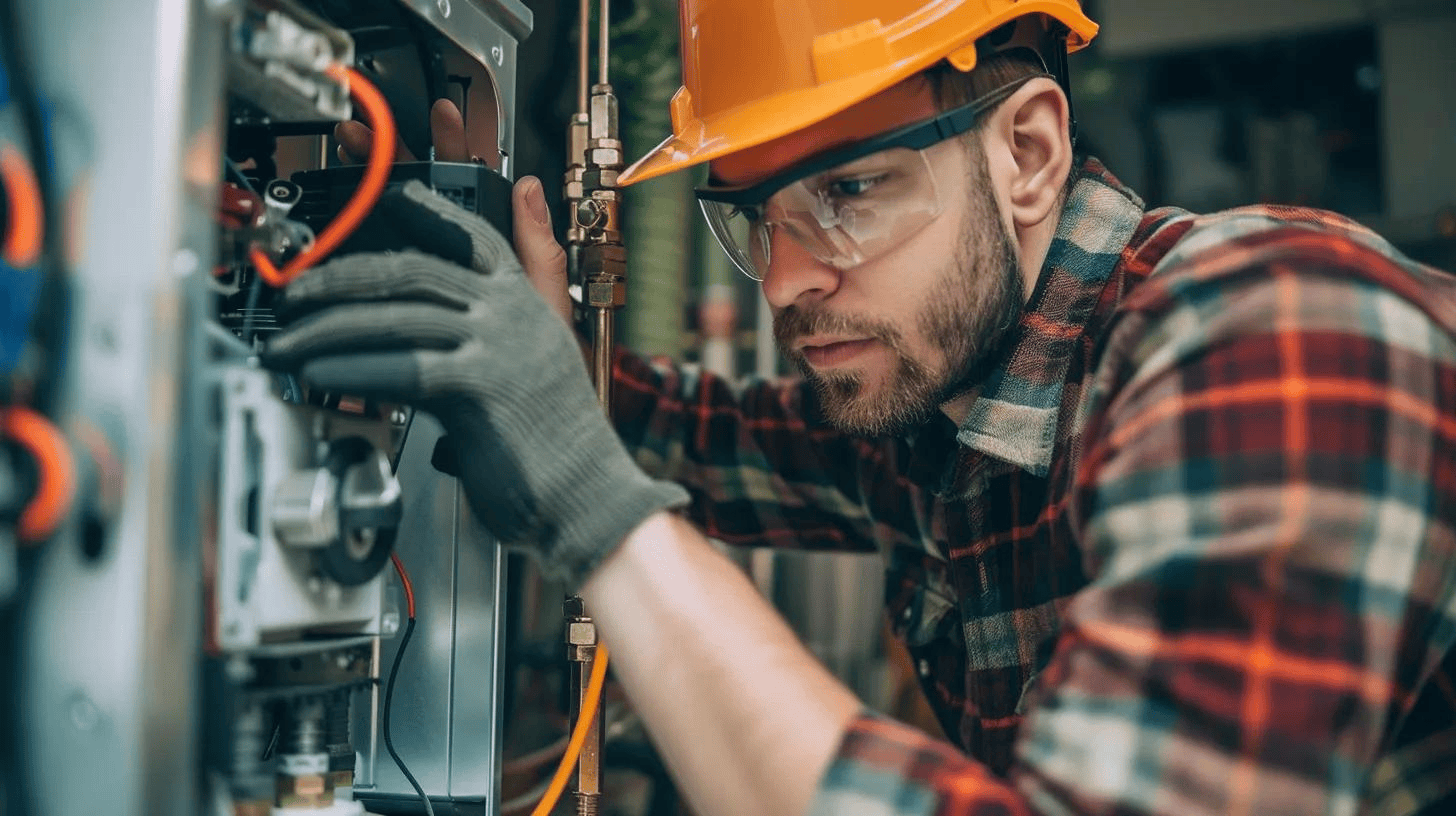
Technicians inspect the heat exchanger and safety systems using a combination of visual inspection, combustion analysis, and diagnostic leak testing to detect cracks or stress fractures that could allow combustion gases into the home. Visual checks look for corrosion, warping, or soot patterns; combustion analyzers measure CO and CO2 levels to reveal incomplete combustion; and pressure or tracer tests determine whether flue or venting leaks exist. Safety controls such as limit switches, rollout sensors, and interlocks are tested under controlled conditions to verify proper operation. Because these procedures involve combustion and gas-handling systems, they should only be performed by trained professionals with appropriate equipment to avoid risk and ensure accurate detection.
Recognizing the technical nature of these tests explains why homeowners should avoid attempting heat exchanger diagnostics themselves and instead rely on certified technicians.
How Can Homeowners Maximize Heating System Efficiency Year-Round?
Maximizing heating efficiency involves seasonal planning, targeted upgrades, and attention to distribution components like ductwork and vents. Key measures include timely filter changes, thermostat programming with setbacks, duct sealing and insulation, and attic and wall air-sealing to reduce heat loss. Combining low-cost actions with occasional professional services—such as duct leakage testing and blower performance tuning—yields the best return on investment. The following seasonal checklist and EAV table compare common efficiency measures by cost, estimated savings, and installation difficulty to help homeowners prioritize improvements.
• Schedule an early fall professional tune-up to prepare for heavy use.
• Use thermostat setbacks when the house is unoccupied or overnight.
• Seal and insulate ducts in unconditioned spaces to reduce distribution losses.
These steps form a year-round approach that balances inexpensive DIY steps with targeted professional work to sustain efficiency and comfort.
Below is a comparison of efficiency measures, their typical cost range, estimated annual savings, and difficulty for homeowners to implement or coordinate.
• Filter upgrade & regular replacement — Typical Cost / Effort: Low cost; homeowner task — Estimated Annual Savings & Difficulty: Moderate savings; low difficulty
• Thermostat programming / smart thermostat — Typical Cost / Effort: Low–moderate cost; homeowner — Estimated Annual Savings & Difficulty: 5–15% heating savings; moderate difficulty for smart setup
• Duct sealing & insulation — Typical Cost / Effort: Moderate cost; pro recommended — Estimated Annual Savings & Difficulty: Significant savings; moderate–high difficulty
• Air sealing & insulation — Typical Cost / Effort: Moderate–high cost; pro/homeowner mix — Estimated Annual Savings & Difficulty: High savings in leaky homes; moderate difficulty
What Are Seasonal Heater Maintenance Tips for Fall and Winter?
In early fall, homeowners should schedule a professional tune-up, replace filters, test carbon monoxide detectors, and clear vents and returns to ensure the system is ready for continuous use. During winter, monitor thermostat behavior for short-cycling, listen for unusual noises, and check that rooms reach set temperatures; take immediate action on any safety signs such as odd odors or CO alarm activation. In spring, follow up with basic system cleaning, record inspection findings, and plan any efficiency upgrades identified during the heating season. A seasonal timeline reduces emergency repairs, maintains performance, and aligns professional services with peak-risk periods when failures are most impactful.
Consistent seasonal checks turn annual maintenance into a predictable routine that minimizes surprises and lowers lifetime operating costs.
How Does Proper Ductwork and Vent Cleaning Improve Heater Performance?
Proper ductwork and vent cleaning improves heater performance by restoring designed airflow, balancing pressure across rooms, and preventing particulate buildup that restricts flow and burdens the blower motor. Sealing visible leaks and insulating ducts in unconditioned spaces reduces heat loss and increases system efficiency, while targeted cleaning addresses blockages and contaminant accumulation that impair indoor air quality. Before undertaking major duct work, assess leakage with testing and prioritize sealing and insulation where losses are largest; professional services can perform tests and repairs that are impractical for most homeowners. Improved duct integrity often yields comfort benefits immediately and supports long-term energy savings.
These distribution improvements complement furnace maintenance and together produce measurable efficiency gains across the heating system.
What Are the Benefits of Annual Furnace Maintenance for Homeowners?
Annual furnace maintenance delivers measurable benefits: improved safety through combustion testing, lower energy bills from optimized airflow and combustion, and extended equipment lifespan through preventive cleaning and calibration. Studies and industry guidance through at least 2025 indicate regular tune-ups can reduce breakdowns and production of combustion byproducts while maintaining efficiency within design parameters. Documented annual service also supports warranty compliance and helps homeowners plan capital expenditures by tracking system health. The next subsection quantifies lifespan and cost impacts and then explains how professional services provide the extra safety and documentation that DIY work cannot.
Routine professional maintenance thus reduces both short-term repair risk and long-term ownership cost while improving comfort and safety.
How Does Regular Maintenance Extend Heater Lifespan and Reduce Costs?
Regular maintenance reduces wear by keeping moving parts clean and properly adjusted, minimizing overheating events, and preventing corrosive soot buildup that accelerates failure. For example, consistent filter replacement and blower maintenance cut unnecessary run-hours, lowering motor stress and delaying component replacement; combustion tuning prevents corrosive byproducts that degrade exchangers. Over time, homeowners can see extended equipment life and lower cumulative repair expenses compared with neglected systems that require emergency replacements. Calculating simple ROI—estimating annual savings from efficiency gains versus maintenance cost—typically shows that preventative care is cost-effective, particularly when factoring avoided emergency repair bills and the value of documented service records.
These mechanisms explain why maintenance is an investment that pays back through both reduced bills and deferred capital replacement.
Why Choose Professional Services Like First Response Heating and Air?
Professional services provide trained technicians equipped to perform combustion analysis, heat exchanger inspection, and electrical safety testing—tasks that are hazardous or impossible for most homeowners to do correctly. First Response Heating and Air, a local HVAC provider listed on their Google Business Profile, offers documented annual tune-ups that include safety-critical inspections and diagnostic testing designed to detect early signs of failure and verify safe operation. Choosing a professional provides homeowners with formal inspection records for warranty and resale, expert recommendations based on diagnostic data, and responsive follow-up for repairs identified during the inspection. For homeowners seeking a dependable local provider to handle complex or safety-related heating work, documented professional service is the recommended path.
Professional expertise complements homeowner maintenance, ensuring safety and maximizing system service life.

Service Areas
