
HVAC Options Comparisons for Homeowners: Evaluating Repair vs. Replacement

Facing Another Winter With an Aging HVAC System
When your older heating and cooling unit starts making strange noises and struggling to maintain temperature, looking at options comparisons for homeowners becomes a top priority before the cold weather sets in. You rely on your system to keep your home comfortable year-round, but an aging unit often brings a growing sense of uncertainty. If you are operating a split system that is more than a decade old, you likely already feel the stress of deciding whether to invest in another round of repairs or upgrade completely.
The transition into late fall is a critical period. November pre-winter readiness means evaluating the technical threshold between routine maintenance and a full system replacement before the first true cold snap arrives. Waiting until your system completely fails leaves you vulnerable to uncomfortable indoor temperatures and rushed decisions. By taking a proactive approach, you can weigh your choices objectively.
If you are exploring comprehensive HVAC services, understanding the technical threshold of your current equipment is the first step. Making an informed, objective decision now provides lasting peace of mind. Throughout this guide, we will break down the framework for comparing your heating and cooling options based on age, efficiency, and long-term reliability.
Understanding the 10-Year HVAC Lifespan Reality
National averages often suggest that a residential heating and cooling system should last 15 to 20 years. However, regional climate factors drastically alter that timeline. In Plant City FL, high humidity and incredibly long cooling seasons push equipment to its absolute limits, accelerating component wear and tear far beyond what a system in a mild northern climate experiences.
Because your system runs almost continuously to combat the heat and moisture, a 10-year-old unit in our region is significantly older in "operational years." The cumulative wear on moving parts is immense. While exploring your air conditioning solutions, it helps to understand exactly why these systems age faster in our climate.
1. Constant humidity management: Your system works double-duty. It must remove thick moisture from the air before it can effectively lower the temperature, requiring longer, harder operating cycles.
2. Lack of a true off-season: Systems in colder climates get a break for several months a year. Here, year-round operation forces components to work continuously.
3. Reversing valve strain: The valve that switches your heat pump from cooling to heating sits idle during the long summer, then is suddenly forced into action when temperatures fluctuate in late fall.
4. Internal component fatigue: Motors, capacitors, and electrical contacts degrade faster under the stress of extreme summer runtime hours.
The early warning signs: Recognizing early signs of declining reliability is crucial. If you notice longer run times, higher energy usage, uneven temperatures between rooms, or strange rattling noises, your system is likely nearing the end of its functional life. Acknowledging this reality helps you prepare for the inevitable replacement rather than being caught off guard.
Evaluating Repair Options: When a Fix Makes Sense
Not every malfunction requires a total system replacement. There are specific technical thresholds where repairing an older system remains the logical and objective choice. The key is distinguishing between an isolated, minor component failure and a systemic, recurring breakdown that signals the end of the equipment's life.
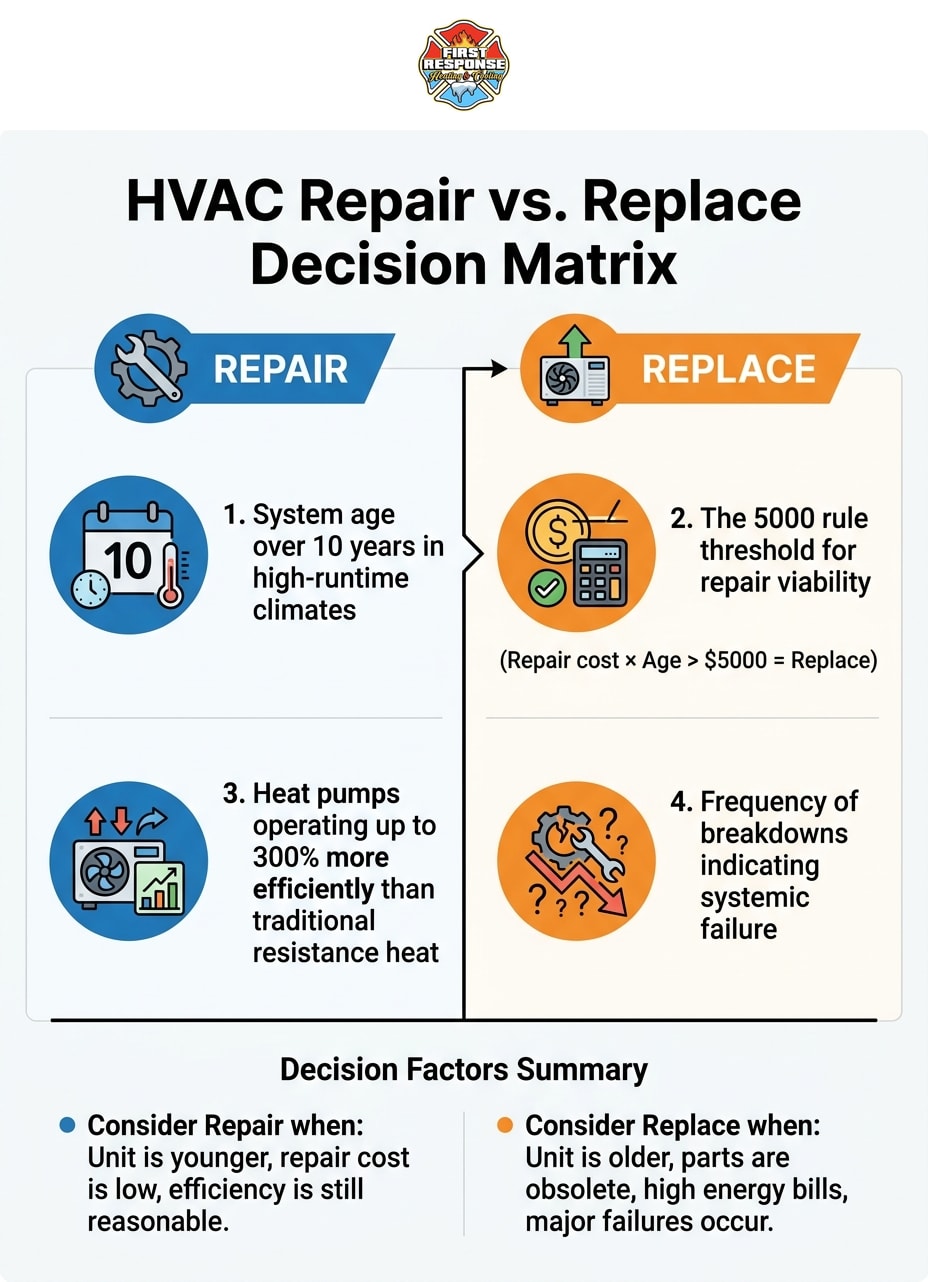
Industry professionals often use the "5000 rule" as a baseline metric for this decision. To use this rule, you multiply the system's age by the estimated repair value. If the resulting number exceeds 5,000, replacement is generally the smarter long-term investment. If the number is well under 5,000, a repair might still make sense. This simple calculation helps remove the emotion from the decision-making process.
Isolated vs. systemic issues: A failing capacitor or a clogged drain line is an isolated issue. These are normal wear-and-tear items. On the other hand, a leaking evaporator coil combined with a struggling compressor points to systemic failure. One local scenario we often see involves minor equipment problems during the summer cooling season. In some cases, a simple equipment problem can be resolved quickly; a technician might even guide a customer to fix a minor user-level issue over the phone, getting the system working again successfully without a major overhaul.
However, professional diagnostics are always required to safely assess the situation. Modern systems operate under high electrical voltage and immense refrigerant pressure. Temporary DIY fixes are dangerous and can cause catastrophic damage to the equipment. If you are unsure what to do if your air conditioner suddenly stops working, relying on licensed professionals ensures you get an accurate assessment of whether a simple fix or a major repair is required.
The Technical Threshold for System Replacement
There comes a tipping point where frequent breakdowns compromise both your indoor comfort and your safety. Patching an obsolete unit year after year eventually costs more in energy waste and emergency service calls than investing in a modern upgrade. Understanding this technical threshold is vital for November pre-winter readiness.
Major component failures often force the replacement decision. If a compressor seizes or a reversing valve fails during the first cold snap, the repair requires extensive labor and parts. At the 10-year mark, these major repairs rarely justify the investment, as another aging component is likely to fail shortly after.
Recognizing Systemic Failures
Systemic failure occurs when multiple components begin to degrade simultaneously. This cascading effect means that fixing one part simply transfers the operational stress to the next weakest link in the system.
• Obsolete refrigerants: Older systems often rely on R-22 refrigerant, which has been phased out of production. If your system develops a leak, sourcing this obsolete refrigerant is incredibly difficult and highly impractical.
• Motor degradation: When the blower motor and the condenser fan motor both begin drawing excessive amperage, the entire electrical system of the unit is compromised.
• Frequent cycling: If the unit turns on and off rapidly (short cycling), it indicates that the system can no longer properly read or manage the indoor environment.
Assessing Operational Strain
Declining energy efficiency leads directly to increased operational strain. As internal coils corrode and fins become damaged, the system must run longer to achieve the same level of comfort. This reduced airflow and poor temperature regulation are clear signals of internal degradation.
The relationship between system age and diminished heating capacity is well documented. An aging unit loses its ability to transfer heat effectively. Upgrading to a new system removes this operational strain, providing long-term benefits including consistent comfort, lower energy consumption, and reliable performance when the weather shifts.
Comparing Heating Systems: Traditional Split Systems vs. Modern Heat Pumps
If you determine that replacement is the best route, providing a clear, technical comparison of the available heating options is the next step. Many older homes rely on traditional split systems that use electrical resistance heating strips. While functional, these older methods are incredibly energy-intensive.
Modern heat pumps offer a fundamentally different approach. Instead of generating heat by forcing electricity through resistance coils, a heat pump transfers existing heat from the outside air into your home. Even when it feels chilly outside, there is still ambient thermal energy available. Because transferring heat requires significantly less electricity than generating it, high-efficiency heat pumps can be up to 300% more efficient than older traditional heating methods.
For homeowners evaluating their heating services, understanding how these systems stack up is critical for long-term satisfaction.
• Heating Method — Traditional Split System (Resistance Heat): Generates heat via electrical resistance strips — Modern Heat Pump System: Transfers ambient heat via refrigerant cycle
• Energy Efficiency — Traditional Split System (Resistance Heat): Lower efficiency; high electrical draw — Modern Heat Pump System: Up to 300% more efficient
• Mild Winter Performance — Traditional Split System (Resistance Heat): Overworks to provide short blasts of heat — Modern Heat Pump System: Provides steady, consistent, gentle warmth
• Maintenance Needs — Traditional Split System (Resistance Heat): Standard seasonal checks — Modern Heat Pump System: Requires careful reversing valve inspection
Efficiency and Performance Metrics
High-efficiency heat pumps are uniquely suited for mild Florida winters. They provide consistent comfort without the heavy energy draw of traditional furnaces. The secret lies in the advanced reversing valve. This component physically reverses the flow of refrigerant, allowing the exact same equipment that cooled your home in August to warm it in November.
Because they do not rely on combustion or heavy electrical resistance, heat pumps maintain a steady, comfortable indoor temperature without the harsh, dry air often associated with older heating methods. Their operational lifespans are impressive, provided they receive proper proactive maintenance to manage the year-round runtime.
Factoring in Energy Efficiency and Generic Incentives
When comparing your options, energy efficiency ratings play a massive role in the overall value of a new system. Modern equipment is graded by SEER2 (Seasonal Energy Efficiency Ratio) for cooling and HSPF2 (Heating Seasonal Performance Factor) for heating. These updated testing metrics reflect real-world conditions much more accurately than older ratings.
What these ratings mean for you: A higher SEER2 or HSPF2 rating means the system requires less electricity to produce the same amount of heating or cooling. Over the lifespan of the equipment, this translates to significantly lower energy consumption. Furthermore, advanced variable-speed motors run continuously at lower speeds, which provides vastly superior humidity control compared to older single-stage units that blast air and then shut off completely.
Navigating Rebates and Tax Credits
Upgrading to a high-efficiency system often qualifies homeowners for various incentive programs. Because energy conservation is a priority, generic federal tax credits and local utility rebates may apply to qualifying heat pump installations.
These generic incentives can help offset the initial investment of a modern heat pump, making the transition much more accessible. It is highly recommended to consult with tax professionals or your local utility company to verify current incentive programs and eligibility requirements before making your final decision.
Beyond the incentives, improved indoor air quality and consistent humidity control factor heavily into the overall value of a new system. A modern unit filters out more airborne particulates and prevents the damp, clammy feeling that older systems often leave behind.
Making the Right Choice for Your Home
Deciding between repairing an aging system and investing in a modern replacement requires weighing system age, repair history, and current performance. In Plant City FL, where the climate demands year-round reliability, prioritizing a proactive approach before seasonal temperature drops occur is the smartest strategy.
You deserve an objective technical evaluation rather than a high-pressure sales pitch. Leveraging First Response Heating & Cooling's deep roots and award-winning local service means you receive honest, reliable advice that prioritizes your best interests. We believe in educating homeowners so they can make the choice that perfectly aligns with their comfort needs and long-term goals.
If you are ready to map out a proactive strategy for your home, securing a comprehensive HVAC maintenance plan or scheduling a professional assessment is the ideal next step. Let our experts help you navigate your options with clarity and confidence.
Frequently Asked Questions
Is it worth repairing a 10 year old HVAC system in Florida?
In most cases, a 10-year-old system in Florida is nearing the end of its operational life due to extreme summer runtime hours. If the repair is minor, it may be worth fixing temporarily. However, if you are facing a major component failure, applying the "5000 rule" usually indicates that replacement is the better long-term investment.
When should I replace my heat pump in Florida?
You should consider replacing your heat pump when it is 10 to 12 years old and begins experiencing frequent breakdowns or declining efficiency. Signs like rising energy consumption, uneven heating, or a failing reversing valve are strong indicators. Replacing the unit before a total failure ensures you maintain consistent indoor comfort.
Should I replace my AC and furnace at the same time?
Yes, replacing both the indoor and outdoor units simultaneously is highly recommended. Modern systems are designed as matched sets; pairing a new outdoor condenser with an old indoor air handler severely limits efficiency and can cause premature component failure. A matched system ensures you get the full benefits of the manufacturer's energy ratings.
Is it better to repair or replace an old HVAC system?
It is better to replace an old system if it requires frequent repairs, uses obsolete R-22 refrigerant, or fails to properly control humidity. Repairing makes sense only for newer systems with isolated, minor issues. An objective evaluation by a licensed professional can help you weigh the long-term reliability against the immediate repair requirements.
How long do heat pumps last in Florida?
Heat pumps in Florida typically last between 10 and 12 years. Because they operate year-round to manage both intense summer heat and winter cold, they endure significantly more wear and tear than systems in milder climates. Regular maintenance is essential to help them reach the upper end of that lifespan.
What are the signs my reversing valve is failing before winter?
A failing reversing valve often causes the system to become stuck in cooling mode, blowing cold air when you request heat. You might also hear a loud hissing or clicking noise when the system attempts to switch modes. If you notice these symptoms during late fall, immediate professional diagnostics are necessary before the colder weather sets in.

Service Areas
