
UV Air Purifier Benefits for HVAC Systems

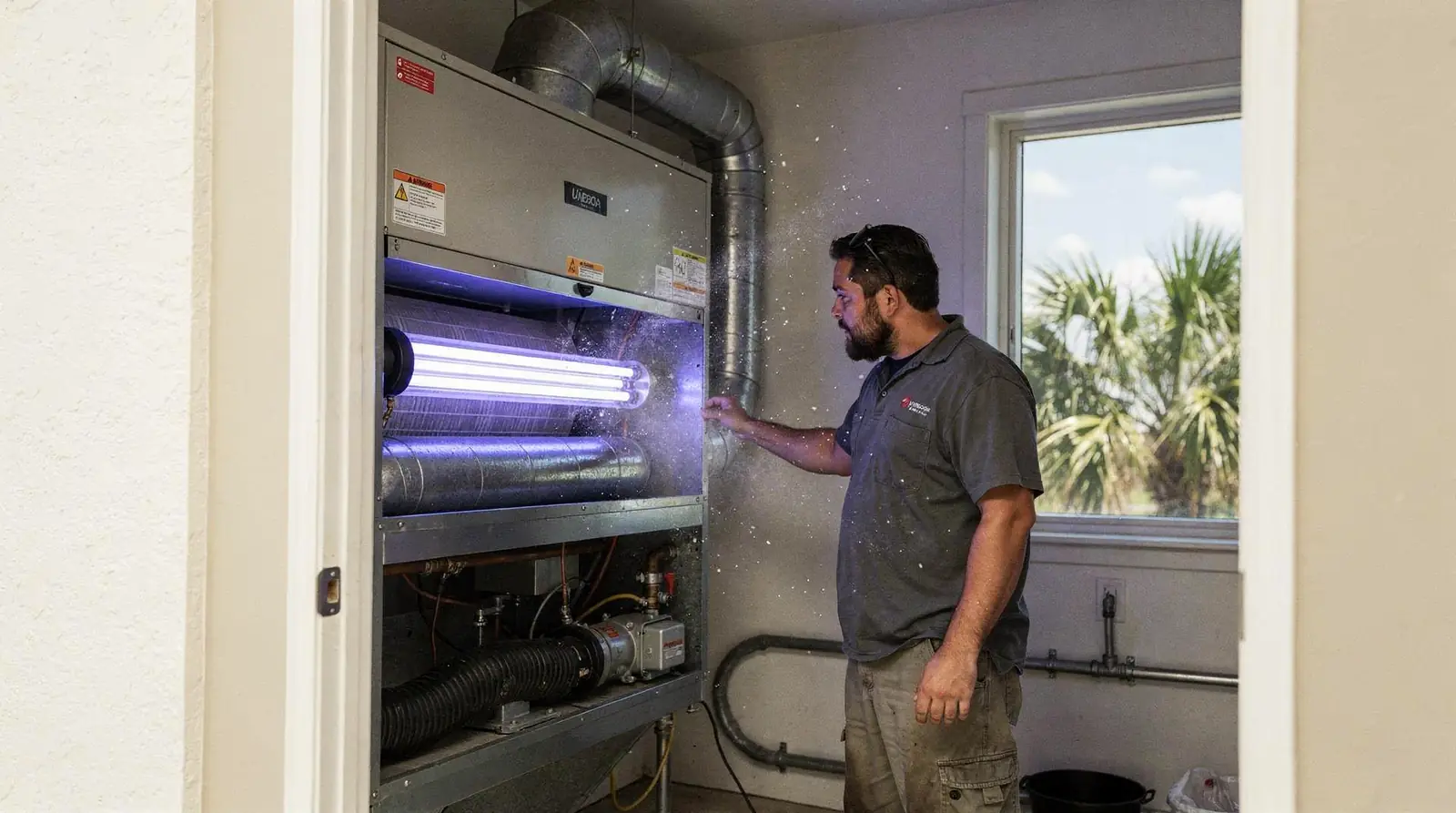
UV Air Purifier Benefits for HVAC Systems
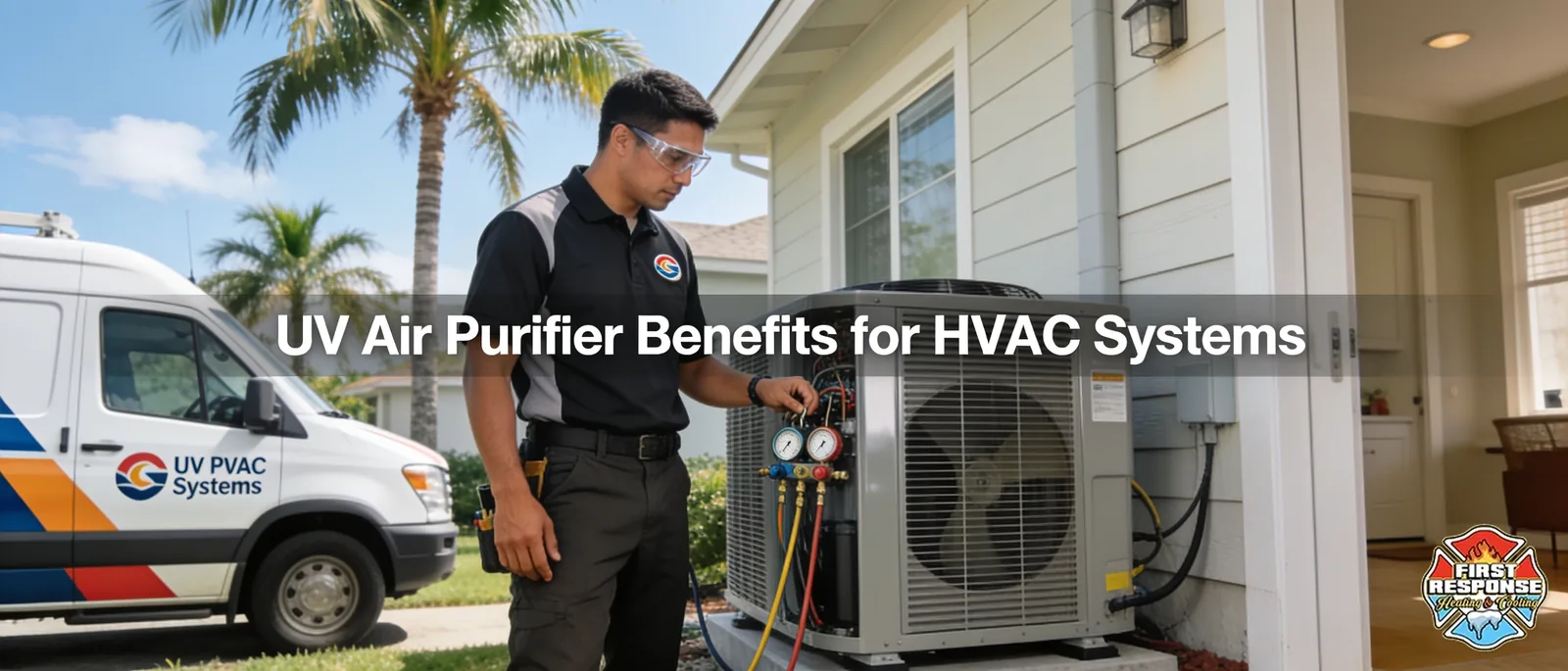
UV air purifiers installed within HVAC systems neutralize bacteria, viruses, and mold spores that standard filters miss. At First Response Heating & Air, we install these lamps directly into heating and cooling equipment, targeting airborne pathogens linked to respiratory issues. This upgrade reduces microbial buildup on coils, improves system efficiency, and supports healthier indoor air for the homes and facilities we serve in Gibsonton, FL.
Key Takeaways
- UV air purifiers eliminate airborne pathogens like COVID-19 through ultraviolet light treatment in HVAC systems. We install these lamps so the sterilization happens continuously, without any extra effort from the household or facility.
- People inhale over 350,000,000 microorganisms daily, making indoor air quality critical for health protection. Most of that exposure comes from indoor air, which is why we treat HVAC purification as a frontline health safeguard.
- Two-stage electrostatic precipitation technology ionizes and collects contaminants as air circulates through ductwork. This process works alongside UV treatment to capture particles that ultraviolet light alone does not neutralize.
- UV light upgrades to HVAC systems reduce disease transmission and improve facility air safety significantly. We recommend this upgrade to any household or facility manager who wants a measurable, ongoing layer of protection.
Why Does Your HVAC System's Air Quality Matter?
Air quality determines whether your HVAC system protects your household or quietly circulates contaminants through every room. Since 2020, business owners and facility managers have made indoor air quality a central concern, and homeowners have followed close behind, and that shift didn't happen by accident.
Awareness spread quickly once people understood that COVID-19 and other airborne toxins move through ductwork just as easily as conditioned air. We've watched facilities in Gibsonton, FL concentrate heavily on their HVAC systems as a result, and that same concern has moved into residential settings. Families now ask us the same questions commercial managers were asking years ago.
What pollutants actually travel through HVAC ductwork?
Bacteria, viruses, and mold spores rank among the most common culprits we find. These pathogens cause a range of health concerns, yet occupants rarely notice them because they're invisible and odorless. You could be breathing contaminated air for weeks before symptoms like congestion, fatigue, or recurring allergies appear.
Why can't standard filters solve the problem alone?
Standard filters trap larger particles but often miss microscopic organisms that reproduce inside coils and ductwork. This is where uv air purifier benefits become clear: ultraviolet light neutralizes pathogens that filtration alone leaves behind. We pair a uv coil purifier with your existing system to target mold and bacteria growth directly on cooling coils, since moisture creates ideal breeding conditions there.
Untreated systems risk becoming pollutant sources rather than pollutant solutions. Consider the difference:
- Filtration only — captures dust and larger debris, but it misses the airborne microorganisms that reproduce inside coils and ductwork. Without an added layer of treatment, those microorganisms keep circulating every time the system runs.
- Air sterilization HVAC upgrades — actively reduce bacteria, viruses, and mold spores circulating through the system. We pair this treatment with existing filtration so both larger debris and microscopic pathogens get addressed.
We help homeowners and facility managers close that gap with equipment designed for lasting protection, not temporary fixes.
What Is a UV Air Purifier?
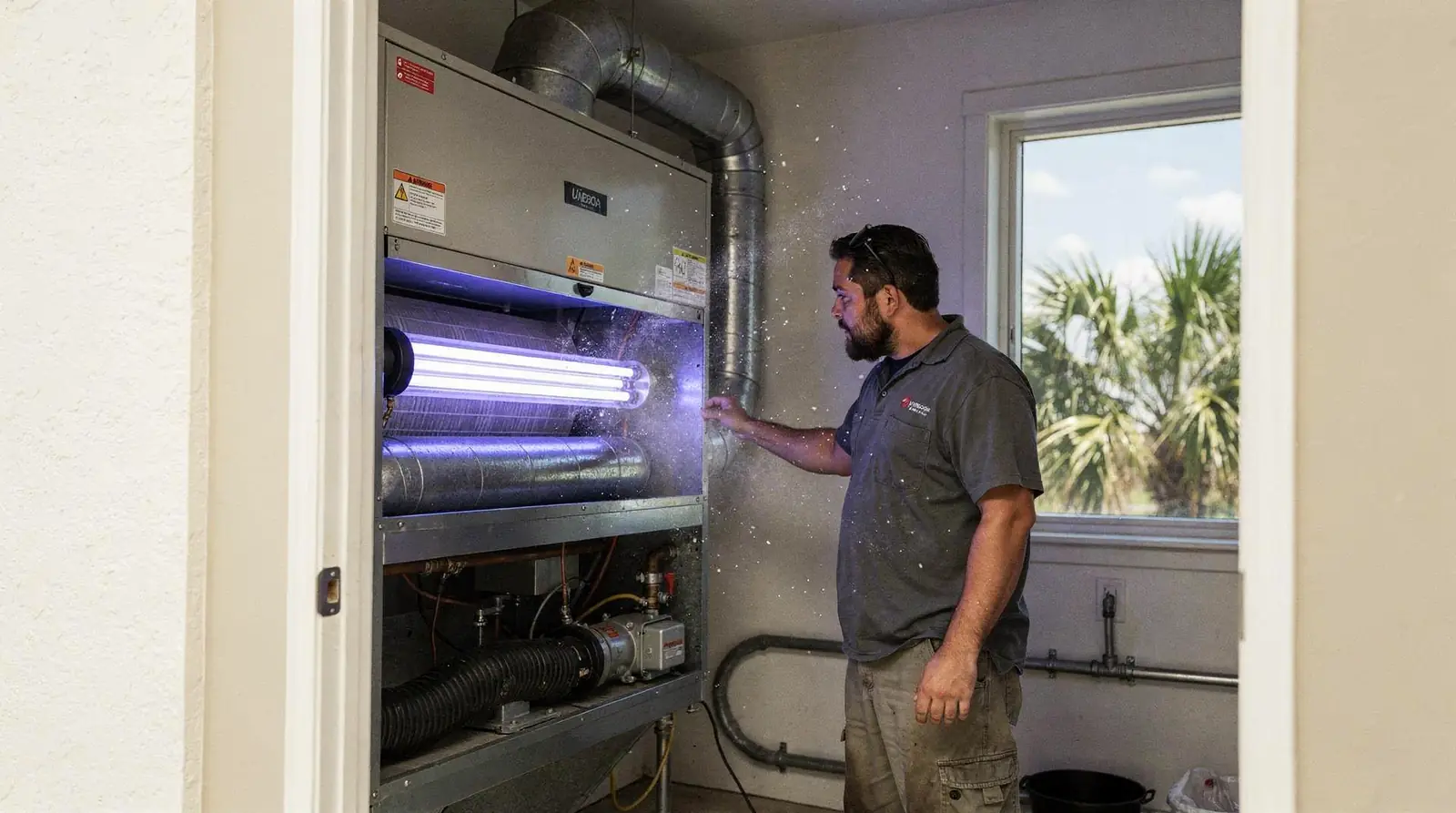
A UV air purifier is a device installed inside HVAC equipment that uses ultraviolet light to neutralize airborne contaminants as they pass through the system. Bacteria, viruses, and mold spores get targeted directly by the ultraviolet energy, breaking down their ability to reproduce. This is the foundation of most uv air purifier benefits we discuss with homeowners and facility managers considering an upgrade.
Not all UV light behaves the same way, and that distinction matters when evaluating a quote. Three forms of UV frequency exist: UVA, UVB, and UVC. Each interacts with airborne particles differently, and HVAC-grade systems typically rely on the frequency best suited for targeting microorganisms without damaging equipment components.
What does UV light actually do inside an HVAC system?
Inside the ductwork or near the coil, ultraviolet light exposure disrupts the cellular structure of bacteria, viruses, and mold spores. This process is often called air sterilization HVAC treatment, since it works continuously as conditioned air circulates. We install these systems so the sterilization happens passively, without requiring homeowners to change daily habits.
How does a UV coil purifier differ from a duct-mounted light?
A uv coil purifier mounts near the evaporator coil, where moisture and organic buildup tend to collect. Positioning the light there addresses mold growth at its source rather than only treating passing air. Duct-mounted lights, by contrast, focus on sterilizing air as it moves through the system.
Many homeowners first learn about this option during a routine service call. An HVAC contractor may raise the idea of installing ultraviolet lights inside a home or office system while inspecting the equipment. We often walk customers through the same conversation, explaining:
- Where the light gets installed — whether it sits at the coil or inside the ductwork determines what it targets first. Coil placement addresses moisture-driven growth, while duct placement focuses on treating the air stream itself.
- Which UV frequency the system uses — HVAC-grade lamps rely on UVC wavelengths engineered for microorganisms, not the UVA and UVB rays associated with sunburn. Knowing this distinction helps homeowners understand exactly what the upgrade protects against.
- What maintenance the bulb requires over its service life — UV bulbs lose intensity over time and need periodic replacement to stay effective. We build that expectation into every installation so performance doesn't quietly decline.
Understanding these basics helps homeowners ask better questions before approving any upgrade.

How Does a UV Coil Purifier Protect Equipment?
A uv coil purifier protects equipment by pairing air filtration with germicidal light, collecting particles and killing bacteria trapped inside the coil and surrounding ductwork. This dual action keeps buildup off the coil surface while reducing what circulates back into a home or business. We install these systems as part of a broader approach to air sterilization hvac upgrades, since coils are where contamination tends to concentrate.
What happens when the HVAC fan runs?
Air moves through the ductwork and across the electronic air cleaner every time the heating or cooling fan turns on. That constant airflow exposes trapped particles to the UV lamp positioned near the coil. Rather than treating air once, the system works continuously during normal operation.
Can UV lights stop mold on the coil?
Certain UV lamps reduce or prevent microorganisms from circulating through the ductwork of a home or office. Mold spores and bacteria often colonize damp coil surfaces first, so targeting that spot directly limits how far contamination spreads. Our technicians position lamps where microbial growth is most likely to start.
The protection extends beyond air quality alone. Coils coated in biological film lose efficiency, run hotter, and strain other components over time. A properly placed UV lamp addresses both concerns at once:
- Coil cleanliness — continuous exposure limits microbial buildup on metal surfaces. Cleaner coils also transfer heat more efficiently, which keeps the whole system working the way it should.
- Airflow protection — filtration captures particles before they reach sensitive parts. That protection reduces strain on fans, motors, and other components that keep air moving.
- System longevity — cleaner coils face less strain during daily cycling. Less strain translates into fewer breakdowns and a longer service life for the equipment.
Homeowners and facility managers weighing a UV add-on quoted by a contractor should recognize that the uv air purifier benefits extend to the equipment itself, not just the air passing through it. We size and place these components based on each system's coil configuration and ductwork layout.
What Health Benefits Come From Air Sterilization?
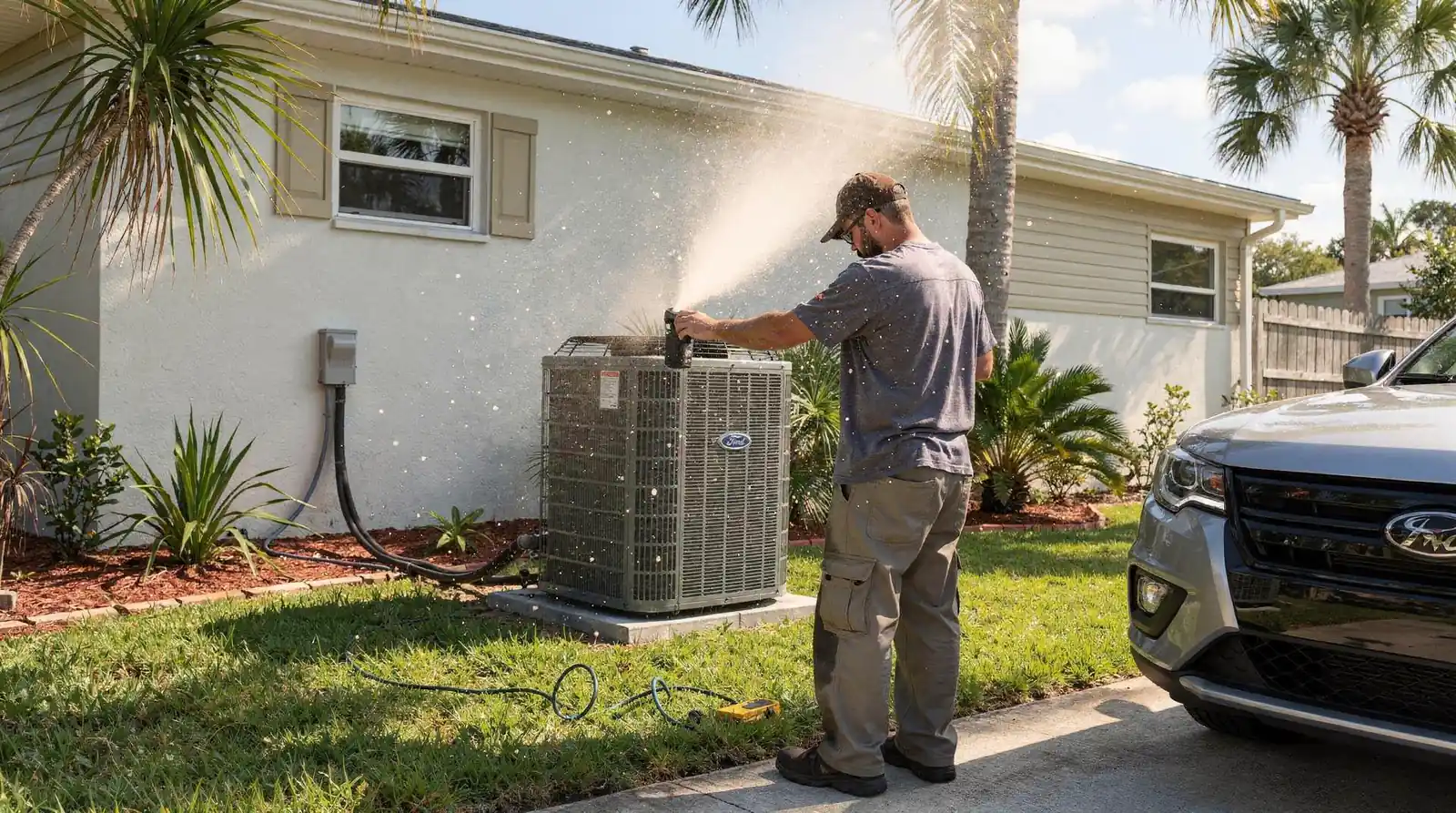
Cleaner breathing air reduces exposure to the particles that trigger allergies, asthma flare-ups, and respiratory irritation. Every day, the average person takes more than 20,000 breaths, drawing in upward of 350 million measurable particles along the way. Most of those particles come from indoor air. Homes and buildings trap dust, mold spores, and bacteria far longer than open outdoor spaces do.
We view air sterilization hvac upgrades as a direct response to that particle load. When a purification device sits inside the ductwork, it treats air every time the system runs, not just when someone remembers to change a filter.
Who benefits most from cleaner indoor air?
Roughly 40 million people in the United States live with allergies or asthma. Both conditions worsen with prolonged exposure to airborne contaminants. Households with young children, older adults, or anyone managing a respiratory condition see the clearest gains from consistent filtration and sterilization. Facility managers overseeing shared spaces face similar stakes, since one contaminated air handler affects everyone downstream of it.
Why has asthma become more common?
Asthma diagnoses have climbed more than a notable share over the past decade. Treatment now places a significant strain on the healthcare system every year. We attribute part of that rise to indoor air quality that hasn't kept pace with tighter, more sealed building construction.
The table below summarizes what sterilization equipment targets and why it matters:
We install and service equipment designed to lower that particle burden throughout the year, giving households and facilities a measurable line of defense against the pollutants driving these rising respiratory numbers.
Can UV Light Reduce Allergens and Asthma Triggers?
Yes — ultraviolet light targets the mold spores, bacteria, and airborne triggers that standard filters often miss. We install these systems because indoor air problems rarely announce themselves; they build quietly inside ductwork until symptoms appear. Allergy-related illness has already cost schools more than 30 million lost days nationwide, proof that poor air quality reaches far beyond a stuffy room.
Mold spores and other pathogens continue circulating through a home or building without any visible warning sign. Occupants breathe them in daily, often unaware that anything is wrong until congestion, coughing, or asthma flare-ups start. This is exactly why we treat cleaning HVAC equipment and adding air purification upgrades as essential, not optional, maintenance steps.
What does a UV coil purifier actually do?
A uv coil purifier installs directly near the evaporator coil. Moisture and dust create ideal breeding conditions for microbial growth. Continuous UV exposure disrupts that growth at the source, keeping the coil cleaner and airflow more consistent. We recommend this placement because it addresses contamination before it ever reaches the ductwork.
Are UV air purifier benefits worth it for allergy sufferers?
Households managing asthma or seasonal allergies notice fewer triggers when uv air purifier benefits include reduced mold and bacterial load in circulated air. Cleaner coils mean fewer spores get pushed through vents and into living spaces.
Our approach to air sterilization hvac upgrades typically includes:
- Inspecting coils and ductwork for existing microbial buildup. We look for moisture, discoloration, and airflow restrictions before recommending any equipment.
- Installing UV lamps positioned for maximum coil and airflow exposure. Correct placement is what determines how effectively the lamp actually reaches contaminated surfaces.
- Recommending filter pairing to catch particles UV light doesn't neutralize, since dust and larger debris still need mechanical filtration. Combining both approaches gives more complete coverage than either one alone.
- Scheduling follow-up checks to confirm the system keeps performing as expected, including bulb condition and airflow readings. Regular check-ins through our maintenance plan help catch a fading bulb before protection drops off.
We stand ready to serve homeowners and facility managers in Gibsonton, FL wherever a UV upgrade is needed, applying the same standards we hold for every installation.
What Are the Limits of UV Air Purifiers?
UV air purifiers reduce airborne bacteria, viruses, and mold spores but leave dust, pet dander, and gaseous odors largely untouched. Coverage depends on lamp placement, bulb condition, and airflow design, so results differ from one HVAC installation to the next.
We install germicidal lamps that use UVC light, not the UVA and UVB rays responsible for sunburn outdoors. Those two wavelength ranges operate on entirely different frequencies, which is why a properly shielded HVAC UV system poses no sunburn risk to occupants. Understanding that distinction matters, because it clarifies what our systems actually target: microorganisms circulating through the ductwork, not skin exposure.
Does staying indoors protect against polluted air?
Not automatically. Indoor air contaminants can be just as dangerous as the pollutants found outside. Sealed spaces trap particles and pathogens rather than dispersing them. Many homeowners assume closed windows equal clean air, but recirculated air without treatment can concentrate contaminants over time.
Can UV lights alone guarantee full indoor air sterilization?
No single component achieves complete air sterilization across an HVAC system. UV lamps work best paired with filtration, proper ventilation, and routine maintenance rather than as a standalone fix.
Several limits are worth weighing before adding a UV coil purifier to any system:
- Detection difficulty: Polluted air is hard to identify without testing, so waiting for visible symptoms delays protection. By the time congestion or fatigue shows up, contamination has usually been building for a while.
- Partial coverage: A UV coil purifier targets growth on the coil surface but does not sanitize every duct run. Long duct runs and hard-to-reach sections still depend on filtration and routine cleaning.
- Bulb degradation: Lamp output weakens over time, reducing microbial reduction if bulbs go unreplaced. We track bulb age during service visits so replacement happens before performance drops.
Because contamination is difficult to detect, we recommend precautionary upgrades rather than reactive decisions once symptoms appear in the household.
Is a UV Light Add-On Worth the Investment?
Yes, a UV germicidal light add-on pays off for most homes and facilities managing allergy sensitivities, mold exposure, or persistent indoor odors. First Response Heating & Air includes UV germicidal lights among our indoor air quality solutions for homeowners and facility managers throughout our Gibsonton, FL service area, alongside whole-home filtration, dehumidifiers, and ERV/HRV systems. We also offer flexible financing options so this upgrade fits comfortably into your plans, and we recommend it to customers seeking real, lasting air sterilization for their HVAC system rather than a temporary fix.
Weighing the value comes down to comparing what each option actually delivers.
Does a UV Light Really Improve Air Quality?
Understanding the uv air purifier benefits starts with knowing where contaminants collect. Mold, bacteria, and mildew grow inside dark, damp duct systems, especially around the evaporator coil. A properly installed uv coil purifier targets that exact growth zone, reducing buildup that would otherwise recirculate through the air supply.
Who Should Consider This Upgrade?
Homeowners and facility managers dealing with recurring musty smells, visible coil grime, or family members with allergy and mold sensitivities benefit most. As a trusted HVAC company, we pair UV lights with repair, replacement, installation, and full service work, plus 24/7 emergency support for homes and facilities in Gibsonton, FL. We evaluate each property before recommending an add-on, and we never suggest UV lighting as a blanket solution — instead, we size it to the system and the household's actual air quality concerns.
How Do You Start a UV Purifier Upgrade?
A UV purifier upgrade starts with a conversation, not a purchase. Most homeowners first hear about this option when one of our service professionals inspects their system and raises the possibility of installing ultraviolet lights inside the equipment. That single moment is the real starting point, and treating the routine visit as an evaluation opportunity matters more than shopping around first.
What happens during that first inspection?
Our professional servicing your home or office system typically checks coil condition, airflow, and existing filtration before mentioning UV as an add-on. This step matters because air sterilization HVAC solutions work best when matched to the system's current setup, not bolted on blindly, and skipping this evaluation risks mismatched equipment and wasted effort.
Once that inspection happens, the next question homeowners ask is usually practical.
Does adding UV lights require replacing my whole system?
No — UV components typically integrate into existing ductwork and equipment rather than requiring a full replacement. A UV coil purifier targets the cooling coil specifically. That surface stays damp and collects the most biological buildup over time.
We treat the upgrade as one piece of a larger indoor air quality conversation. Combining equipment cleaning with purification upgrades is considered a critical step toward a healthier indoor environment, not an isolated fix. That's why we fold UV air purifier benefits into our indoor air quality solutions rather than selling them as a standalone add-on.
A practical starting sequence looks like this:
- Request a system inspection during a routine or emergency service call. That visit gives us a clear picture of your equipment before any upgrade gets recommended.
- Ask direct questions about coil condition and duct cleanliness. Understanding what's already collecting in the system helps frame whether UV treatment makes sense.
- Discuss UV placement options with the servicing professional. Coil-mounted and duct-mounted lights solve slightly different problems, so the right choice depends on your setup.
- Confirm the upgrade fits your specific equipment layout. We size every UV component to the system it's protecting rather than installing a one-size-fits-all unit.
Because we provide 24/7 emergency support alongside indoor air quality services, homeowners get one point of contact for the entire process, with no juggling separate providers for repair and air quality upgrades.
Ready to Upgrade Your Indoor Air Quality?
UV air purifiers represent a meaningful investment in both your home's air quality and your family's respiratory health. By neutralizing harmful microorganisms within your HVAC system, we help these advanced purifiers work continuously to reduce airborne contaminants and allergens. The result is cleaner air circulating throughout your home, enhanced system efficiency, and greater peace of mind knowing your indoor environment supports better health outcomes. First Response Heating & Air stands ready to help you explore how UV purification technology fits your specific comfort needs — reach out to our team to start the conversation.
FAQ
What do UV air purifiers actually remove from HVAC systems?
UV air purifiers neutralize bacteria, viruses, and mold spores that circulate through ductwork and grow on cooling coils. This targets pathogens linked to congestion, fatigue, and recurring allergies that standard filters miss.
Why aren't standard HVAC filters enough for clean air?
Standard filters trap larger particles but miss microscopic organisms that reproduce inside coils and ductwork. UV light neutralizes these pathogens directly, closing the gap that filtration alone leaves open.
Where do UV air purifiers get installed in an HVAC system?
First Response Heating & Air installs UV lamps directly into heating and cooling equipment, targeting airborne pathogens and reducing microbial buildup on coils. This improves system efficiency and indoor air quality for homes and facilities in Gibsonton, FL.

Service Areas
